You know your pain is real.
Endometriosis affects both how you feel day to day and your path to pregnancy. We care for both, beginning with an accurate diagnosis and a plan built around you. There is a path forward, and we will walk it with you.
Understanding endometriosis
Endometriosis is a condition where tissue similar to the lining of the uterus grows outside it — most often on the ovaries, fallopian tubes, and pelvic lining. That tissue responds to your cycle each month, causing inflammation, scarring, and pain that can range from mild to debilitating.
It's common, and commonly missed. Symptoms are often dismissed as "normal" period pain, which is part of why diagnosis is frequently delayed for years. We take reports of pelvic pain seriously from the first visit.
Common symptoms
Pelvic pain that is often, but not always, worse around your period; painful periods that don't respond well to over-the-counter medication; pain during or after intercourse; and pain with bowel movements or urination, especially around your cycle. Gastrointestinal symptoms such as bloating, diarrhea, constipation, and nausea are also common.
Conditions that often coexist
Pelvic adhesions, adenomyosis, fibroids, interstitial cystitis, and pelvic floor muscle spasm can all coexist with endometriosis and compound pelvic pain. A thorough evaluation looks for these alongside endometriosis itself, because treating one without the others often leaves pain unresolved.
What causes it?
No single cause is fully agreed upon. Leading theories include retrograde menstruation, immune system dysfunction, and abnormal cell development before birth. What we do know is that it is a real, physical disease — not something to be talked out of.
Getting an accurate diagnosis
A detailed history, pelvic exam, and pelvic ultrasound can raise strong suspicion and help rule out other causes of pain. A definitive diagnosis is made surgically, through laparoscopy, when visible lesions can be identified and biopsied. We don't require years of trial-and-error medication before taking your pain seriously.
Our approach: excision, not just suppression
Hormonal suppression can quiet symptoms for a time, but it does not remove the disease, and symptoms often return once medication is stopped. We favor laparoscopic excision: carefully removing endometriosis at its root, in the same procedure used to diagnose it. Studies comparing techniques are limited, but many endometriosis surgeons favor thorough excision, especially for deep or extensive disease, because it removes the disease itself rather than treating only its surface.
Is pregnancy possible after an endometriosis diagnosis?
Often, yes. Endometriosis is one of the more common findings in women evaluated for infertility, but a diagnosis doesn't mean pregnancy is out of reach. Many women with endometriosis conceive, some without any treatment at all, and many others after appropriate care.
The right next step depends on the severity and location of your disease, your age, and your overall reproductive health — which is why evaluation comes before any treatment recommendation.

How endometriosis can affect fertility
Endometriosis can disrupt ovulation, cause scarring or adhesions that block or distort the fallopian tubes, create a pelvic environment less hospitable to implantation, and contribute to chronic inflammation that may affect egg and embryo quality. In some cases it is also associated with reduced ovarian reserve over time. Not every mechanism applies to every patient.
Not everyone with endo has fertility problems
Severity of disease doesn't always predict fertility impact. Some women with extensive endometriosis conceive without difficulty, while others with milder disease struggle more. Age, coexisting conditions, and anatomy all factor in, which is why we evaluate your specific situation rather than applying one protocol to everyone.
Excision and adhesion prevention, together
When surgery is appropriate, we combine thorough excision of visible disease with techniques aimed at minimizing new adhesion formation afterward, since scar tissue from surgery can also affect fertility if left unaddressed. Surgery is often paired with cycle charting so we understand your hormonal patterns before and after treatment.
Surgery to remove endometriosis
When medication isn't enough, or when endometriosis is affecting your fertility, surgery can both confirm the diagnosis and remove the disease. How the surgery is done matters.
Excision vs. ablation
Excision cuts endometriosis out so the disease is removed at its root and the tissue can be sent for biopsy. Ablation, sometimes called fulguration, burns or vaporizes the surface of lesions, which can leave deeper disease behind. Studies comparing the two are limited, and the right choice depends on where your disease is, but many endometriosis surgeons favor excision, especially for deep or extensive disease.
What the surgery involves
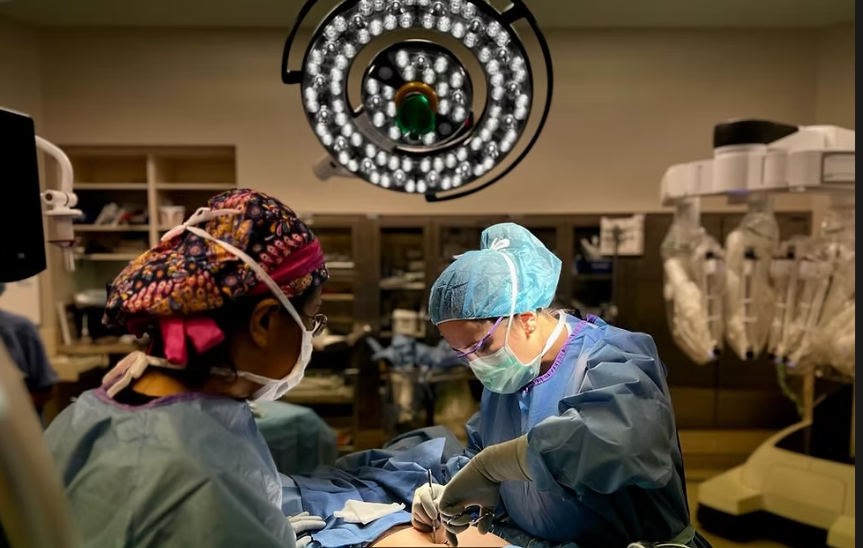
Endometriosis surgery is done laparoscopically, through a few small incisions, sometimes with robotic assistance. Your surgeon inspects the whole pelvis, removes visible disease, and addresses related findings such as adhesions or endometriomas (ovarian cysts) in the same procedure. Tissue is biopsied to confirm the diagnosis.
Is surgery right for me?
Surgery is worth considering if pain persists despite medication, if imaging suggests deep disease or an endometrioma, or if endometriosis may be contributing to infertility. It isn't the right step for everyone. We'll talk through your symptoms, imaging, and goals, including whether you hope to conceive, before recommending it.
Recovery and follow-up
Many patients go home the same day, though recovery time varies with how extensive the surgery was. We plan pain control and activity guidance with you ahead of time and follow up afterward to see how your symptoms are responding. For some patients, pelvic floor therapy and cycle charting are part of recovery.
What to know before deciding
Every surgery carries risks, including bleeding, infection, injury to nearby organs, and anesthesia complications, and your surgeon will review them with you. Endometriosis can also return after surgery, and surgery is not a guarantee of pain relief or pregnancy. The goal is to remove as much disease as safely possible and give you the best chance at both.
Our surgical approach
Dr. Ashley Womack completed a two-year fellowship in complex minimally invasive gynecologic surgery, including advanced robotic surgical training. We favor thorough excision of endometriosis, paired with attention to adhesions and to your long-term goals, so that surgery treats the cause of your symptoms and not only the surface of the disease.