treatments & education
Conditions We Treat

Conditions we evaluate and treat
We look for the cause behind your symptoms, then build a plan around what we find, and around you. Here are the conditions patients come to us for most.
Endometriosis
Pain, fertility, and surgery in one place. We diagnose and treat endometriosis with minimally invasive excision, aiming to remove the disease at its root.
Explore endometriosis →Infertility
Infertility is a symptom, not a diagnosis, and it often has more than one cause. We look at ovulation, the fallopian tubes, the uterus, hormones, and sperm health together, using blood tests, ultrasound, imaging, and when needed, minimally invasive surgery.
Causes and evaluation
There are often multiple factors behind infertility, including:
- Ovulation disorders
- Endometriosis
- Blocked or damaged fallopian tubes
- Uterine abnormalities such as fibroids, adhesions, or adenomyosis
- Hormonal issues such as hypothyroidism or low progesterone
- Limited cervical mucus
- Pelvic adhesions
- Low sperm counts or poor sperm motility
We seek the root cause by evaluating different aspects of your overall health, then provide a comprehensive diagnostic evaluation including:
- Blood tests
- Pelvic ultrasounds
- Follicle ultrasound study
- Selective hysterosalpingogram (SHSG)
- Diagnostic hysteroscopy
- Diagnostic laparoscopy
- Semen analysis
Recurrent miscarriage
Pregnancy loss can involve genetics, hormones, endometriosis, and environmental factors. We monitor hormone health before and after conception and, when it makes sense, use endometrial biopsies and swabs, genetic testing, supplements, or surgery to address what we find.
Causes and treatments
We look at the multiple factors that lead to pregnancy loss, including genetics, hormones, endometriosis, and environmental factors. Then we offer a variety of treatments:
- Hormone health monitoring before and after conception
- Surgical intervention
- Endometrial biopsies and swabs
- Genetic testing
- Supplements
PCOS
PCOS is a hormonal condition marked by irregular periods, excess androgens, and a typical appearance of the ovaries on ultrasound. We look for the root causes and build a plan around lifestyle, nutrition guidance, and personalized medical care.
Insulin resistance
Insulin resistance can interfere with ovulation and often goes hand in hand with PCOS. We test for it and, when it is present, treat it as part of your overall plan rather than as a separate problem.
Heavy and painful periods
Heavy bleeding, irregular cycles, severe cramps, and PMS or PMDD are common, but they are not something you have to accept as normal. We look for causes such as fibroids, adenomyosis, endometriosis, and hormone imbalance.
Tubal blockage
A blocked or damaged fallopian tube can stand between you and pregnancy. We evaluate the tubes with selective HSG and, when it is appropriate, can reopen them with tubal canalization or repair them surgically.
See treatments →Pelvic adhesions
Scar tissue from surgery, infection, or endometriosis can bind pelvic organs together and cause pain or affect fertility. Laparoscopic surgery lets us both see and release adhesions.
Fibroids and polyps
Uterine fibroids and uterine or cervical polyps can cause heavy bleeding, pain, or trouble conceiving. Depending on what we find, treatment may include hysteroscopy, polypectomy, or myomectomy.
See treatments →Cesarean scar defect
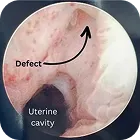
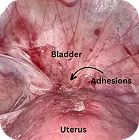
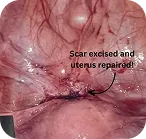
About one in three babies in the U.S. is born by c-section, and some scars leave a pouch called an isthmocele, or niche. It can cause abnormal bleeding, pain, or infertility, and it can be repaired surgically.
See how we repair it
Almost one third of babies in the United States are born by c-section. While c-sections lead to a healthy delivery, a cesarean scar defect, also called an isthmocele or uterine niche, may develop. Here is how we repair it:
Male infertility
Fertility depends on both partners, and an estimated one in five infertility cases involves a male factor such as low sperm count, poor motility, or abnormal sperm shape. We evaluate and treat men too.
Learn about male fertility →Hormone and thyroid imbalance
Thyroid problems, low progesterone, and other hormone abnormalities can quietly disrupt cycles and fertility. We test for them and treat them with cycle-based care such as thyroid support and cyclic hormone supplementation.
Testing that finds the root cause
We don't guess. Depending on your history and goals, your evaluation may include the tests at right, including testing for insulin resistance and evaluation of male infertility.
Other conditions we evaluate
If your concern isn't listed above, reach out. A thorough evaluation is the first step for anything affecting your cycle, fertility, or gynecologic health.